Cinema’s New Sorcery: Jorge Núñez’s Merlin
By Maximilian Le Cain
In the 21st century, radical cinema’s last untamed frontier is personal filmmaking. Not filmmaking that is simply personal in subject matter: with image-making equipment so widely accessible, showing one’s home movies hardly counts as exceptional anymore. Having a ‘personal style’ or ‘approach’ to telling a story doesn’t quite cut it either. What is required is less a personal voice than a whole personal language. Yes, personal subject matter is prerequisite, but no more so than a unique, redefining relationship to time, to perception, to moving image technology itself. Work that is experimental by default. Not simply films that only their creator could make but films that are the only films that their creator could possibly make. Films that have no excuse to exist outside of the fact that they absolutely must, for their own sake, whatever their circumstances of production or distribution. Cinema has fulsomely dialogued with itself since the end of the 19th century. Histories, counter-histories: we know where it all stands and how it all relates. Information, counter-information, power structures, oppositional strategies… To serve cinema best, it is no longer really sufficient to align oneself within these paradigms, neither to speak loudest nor even most righteously. Perhaps the soundest encapsulation of what serves cinema best today is to strive to capture the worldview of an alien looking at this tired old planet of ours for the first time. Paradoxically, it is through this extreme act of attempting to step outside of human consciousness that cinema is redeemed as a tool for seeing the world afresh, for sloughing off the patterns of information that regulate us and catching a glimpse of what a strange and marvellous planet we inhabit and of the richness of our perceptual faculties when thus liberated. Such a cinema can be a ritual, a private ritual not unrelated to the shamanic. A ritual which currently has as a high priest the latest incarnation of a famous magician: Merlin.
Merlin is the alter-ego of Basque underground filmmaker Jorge Núñez, the artist towards whose extraordinary movies the preceding trail of ideas directly leads. A man who consciously set himself the task of filming as a visitor to this planet and whose work does indeed seem to consist of video tapes abandoned when their creator vanished back into another dimension. I first became aware of this work when I met Jorge at the Puerta arts space in Bilbao last year, where a self-published DVD of some of his films was on sale. Attracted by the DIY paper sleeve, I asked him about the films. He told me first that they were horror films like Herschell Gordon Lewis’ ultra low budget B-classics. But then he hastily added that they were also like James Benning. He couldn’t have known it then, but the concept of a Benning / Gordon Lewis hybrid is a pitch that might have been specifically designed to immediately pique my curiosity. But I also knew that in order to live up to its promise, the work would need to actually have very little in common with either of those filmmakers. Their intersection would have to prove a desperate and necessarily makeshift set of coordinates indicating a very particular sensibility in an underpopulated cinematic wilderness that defies charting. And this proved to be the case. Granted, there are elements in Núñez’s films that evoke cottage industry horror flicks and their pace is radically contemplative at times. But Núñez’s vision is something utterly unique. One might grasp at the name of George Kuchar in pointing out home movie science fiction, toys recast in epic mode, fancy dress costumes, stylised B-minus acting and an occasional preoccupation with aliens. But, sometimes seemingly against all odds, there is a mysterious quietness and a melancholy sobriety about Núñez that makes this comparison with Kuchar’s appalled carnivalesque histrionics feel somehow unseemly.
Núñez’s films are unsettling in their overturning of a reality we think we can take for granted. To illustrate this quality, imagine a lonely visionary oddball, seated quietly in a kitchen, inoffensively wrapped up in his own world. We pass him every day, preoccupied with our banal activities, barely taking any notice of him. We are completely unaware of the exceptional intensity of his experience of things that we fail to notice or summarily dismiss as absurd. Once, however, we are sucked into his worldview, we can never see things in quite the same way again, the things which belong to a reality we assumed we had always shared with him. Toys, strobing lights, musical instruments and tacky old movies all become the objects of ritual, and spirits wander in broad daylight. Less than aliens as such, Núñez’s preoccupation seems to be with the raising of hidden forces: mummies, Atlanteans, genies, sorcerers. His best films, oddly poignant and elusive, prove difficult to enter, almost impossible to leave and very hard to pin down in the mind after they have finished. They have the rare quality of possessing a sort of in-built sense of forgetfulness: one might recall every frame but the impression persists of something not quite grasped, as if one had been asleep for part of the film.
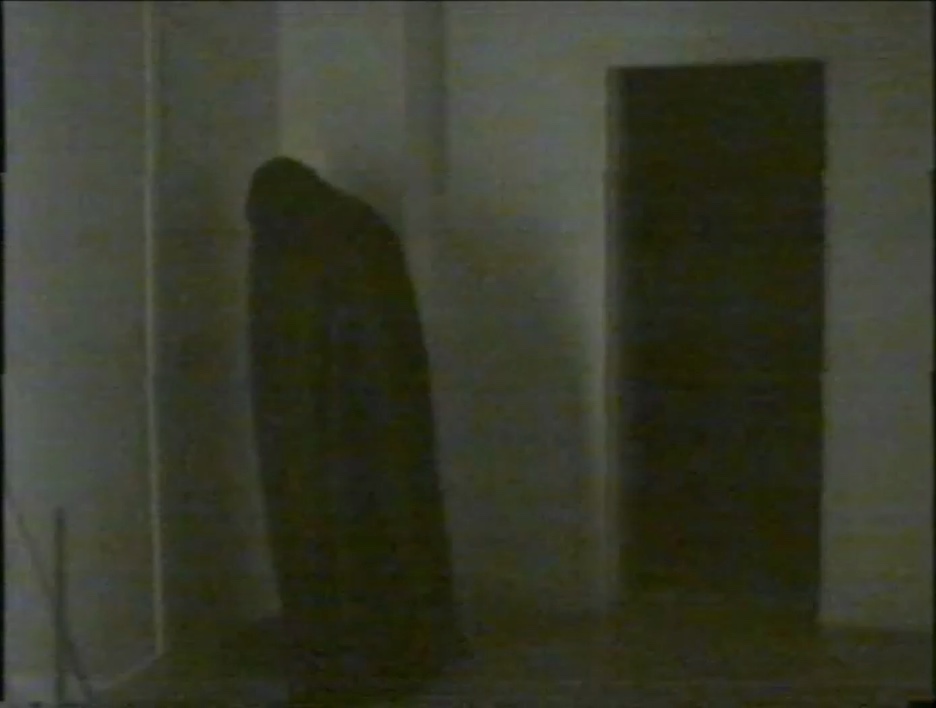
Much of this power is predicated on Núñez’s devotion to using lo-fi domestic equipment and his skill at tapping into the weirdness which its intimacy, its domesticity, can convey. Since The Blair Witch Project (1999), horror cinema has made a cliché out of the rather obvious and literal use of home movie technology to subjectify scary narratives. A far more interesting quality of home video, especially if one is watching ‘found’ tapes shot by persons unknown in equally unknown locations, is the strange pressure of duration that can be found in them, particularly if nothing much is happening. Should we be watching this private video? Why are they filming this? How much intentionality is behind what we are seeing? Was anyone ever even intended to see it? A space opens where anything could happen even if nothing does. Strung between boredom and an uneasy anticipation, we are adrift in the moving image material to an extent that is impossible in any sort of deliberately structured work.
More questions emerge from this strange tension. Is the video, so to speak, making itself? Is its author the person holding the camera or the camera itself? The unsettling thing about this type of footage is that it might be the most personal or the most impersonal of visions, or both simultaneously. We have no way of knowing and the result is the sense of something truly alien at work. This void can arguably only be generated with videotape. Film reels are comparatively short, precluding video’s capacity for endlessly letting the camera roll. Digital formats highlight the shot as a discrete unit by breaking each one into a separate, instantly accessible file which eliminates the potential mystery of a tape full of unknown footage.
Núñez harnesses this uncanny quality of home video dead time in all of his longer films, most successfully in Marrón de Momia (2012), an absolute masterpiece of structuring and one of the finest films of recent years. It is what accounts for the strange impression of lacunae that imposes itself in thinking back over his films. These films feel unguided; we are not sure who is in control of them and this makes them feel extremely alien. Of course, closer scrutiny reveals extremely well thought out structures but their unfolding suggests the private logic of a non-human entity with obscure fascinations. Non-human or too human: an inner sensitivity too specific and fragile to translate itself into accepted modes of communication. This transition seems to have occurred between Marrón de Momia and The Mask of Atlantis (2013) and the more recent Aladino & Friends (2014) and Merlin the Sorcerer (2015). In every case, the films feel like mysterious video tapes that have been discovered in someone’s attic or lodged in a second-hand camera picked up in a junk shop. This works to imbue them with a materiality as tape that extends the film beyond the confines of its diegesis. They are full of mysteriously charged objects that serve as totemic fetishes, endowed with the ritual function that a toy has when it becomes the focus of a child’s energies of imagination. A bandage wrapped around an arm can make that arm other to the body it is attached to and its wearer both observer and mummy. Two musicians sitting on a ‘magic’ rug spread on a living room floor can fly over a city in a transport of shamanic vision. The texture of a piece of cheese on a kitchen table as obsessively lingered over by Núñez’s camera gives us a powerful sensory connection with a character who is otherwise utterly opaque.
The medium of videotape, most specifically VHS, is, in a similar way, the link between us and the films, the means by which they hauntingly spill over from the screen. We’ve all used a camcorder or similar; we can all identify with the way these films were shot and the cassettes that house them. But there is another dimension to this familiar, informal medium: it was where, in the ’80s and ’90s, we finally laid our grubby hands on ‘real’ films. Torn down from the pristine, untouchable firmament of the silver screen, entertainment industry fantasies were presented in the same grungy format as home movies. They could be recorded, re-recorded and wiped over, and the wear and dirt that ate away at them was the same as devoured the footage we shot. VHS was a great leveler and, from the perspective of the 21st century and the total change that digital technology has brought about in these fields, this is clearer now than it ever has been. Visit any junk shop and you’re likely to find a couple of home video tapes thrown in with a discarded smattering of movies and TV shows in this now almost exotically dated medium. Watching a feature film and a home movie side by side today in this way, it is perhaps the unfamiliarity of the once-ubiquitous format that is the most striking feature of the viewing. Both have become time capsules from the recent past and, as such, inevitably startling in just how distant they suddenly seem. As with the aftermath of one of Núñez’s films, we are drawn to interrogate our own memories with the uneasy sense that some shift in reality has taken place that we were witness to but somehow largely eluded us; that we weren’t paying enough attention to the passing of time. The tape itself becomes a time capsule of obscure but troublingly familiar origin encoded with an ancient energy like a dormant mummy or Atlantean ready to rise again.
Núñez’s sensibility seems very much rooted in ’80s and ’90s horror and sci-fi, particularly as experienced through the private platforms of TV and video. It is an aesthetic he has remained faithful to, but one senses that it is more a cherished personal relationship with the aura of these films as permeating his reality than the films themselves that he draws on. Put another way, it is not the movie playing out on screen so much as the movie playing on a TV and the room in which that TV sits that fascinates him. In fact his work, which seems at first to be imbued with cinematic referentiality, ultimately refers only to a relationship with cinema or to symptoms in a reality that has been infected by the radiation of cinema as disseminated through VHS. A popular, shared pool of cultural memory is reconfigured as a private language, an esoteric ritual language. A film on VHS is no longer the final link in a production/distribution chain that goes all the way back to the film industry. It has become something like a stone, a feather, a knife: an object fully absorbed into the world and reclaimed as an obscure but potent talisman.
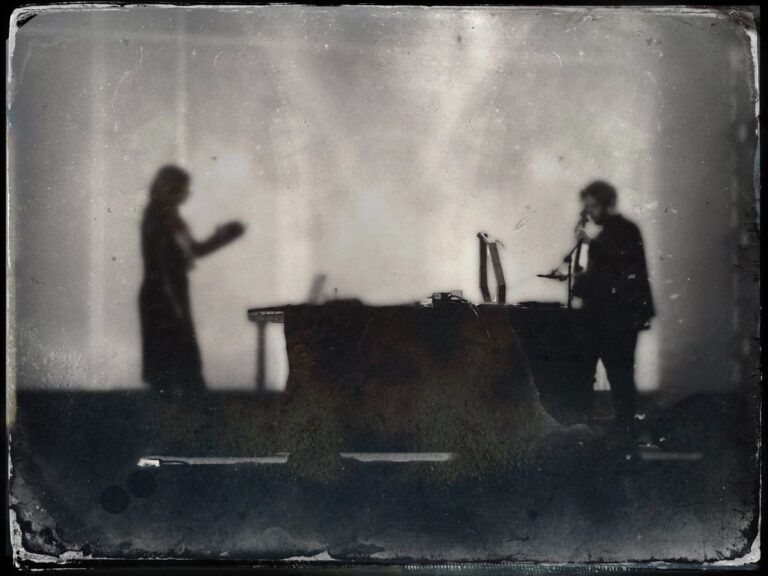
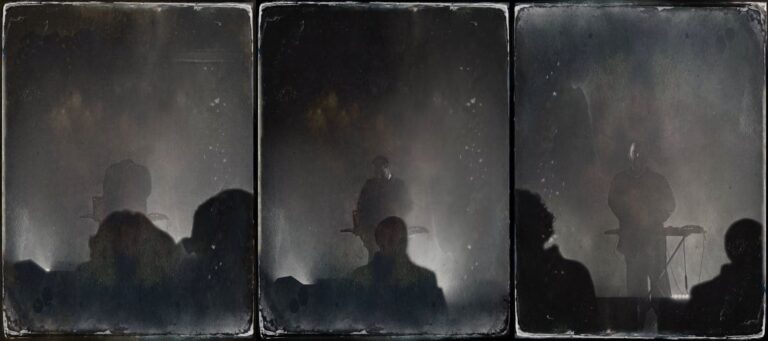
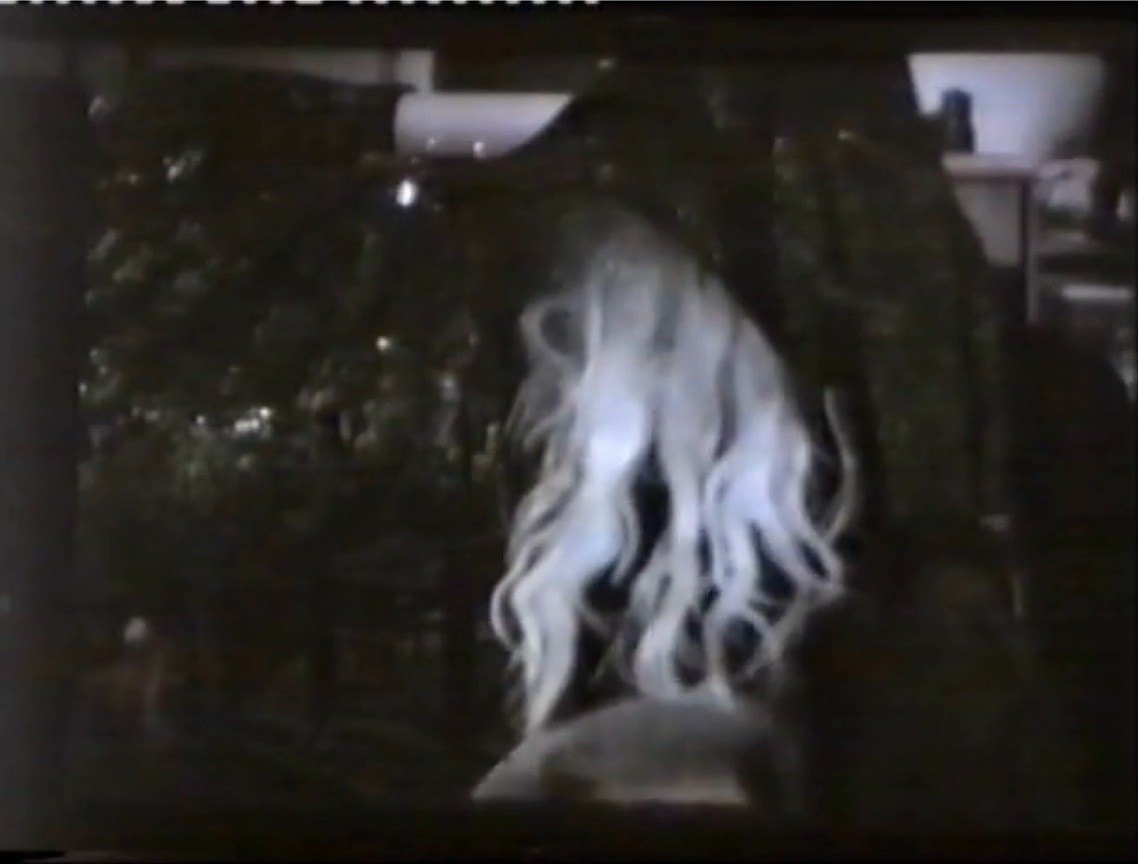
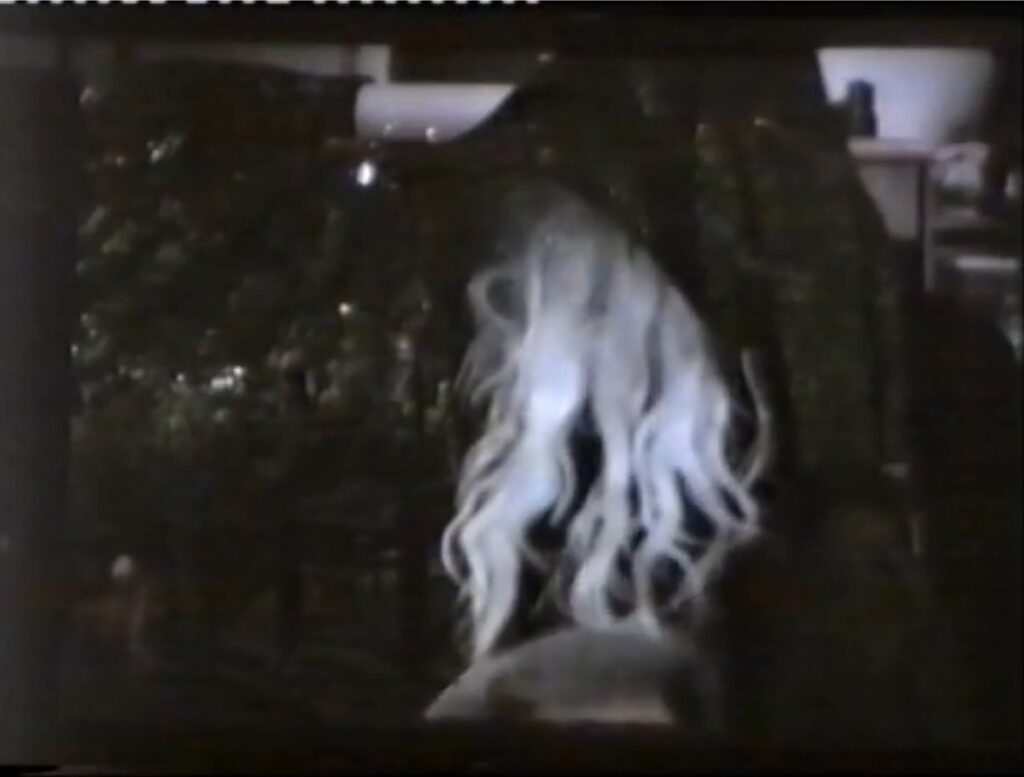
This bizarre arrangement underlies all of Núñez’s most substantial films, but it has now been clearly stated in his most recent, Merlin the Sorcerer, one of the most idiosyncratic creative manifestos imaginable. Merlin, a cowled figure, distinguished by the fake flowing locks of a long grey wig curling from beneath his hood and obscuring his face, seems to also exist beyond this film. Núñez has made several public appearances as this character, including at the opening event of Pantalla Fantasma, the outsider film festival of which he is artistic director. This magician figure seems to variously stand for Núñez as filmmaker, curator and visionary.
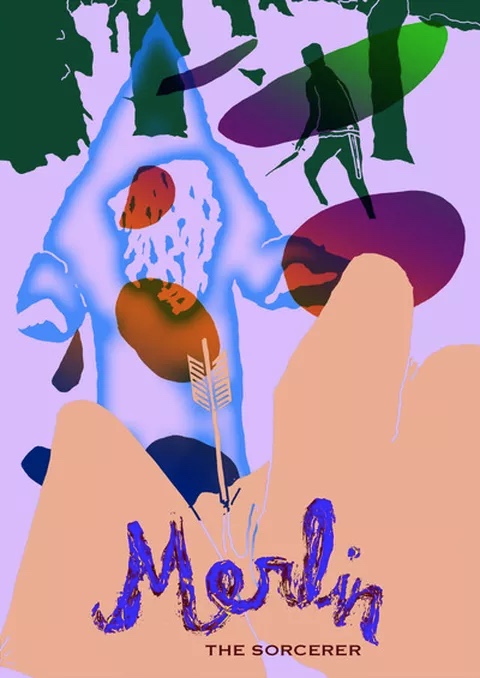
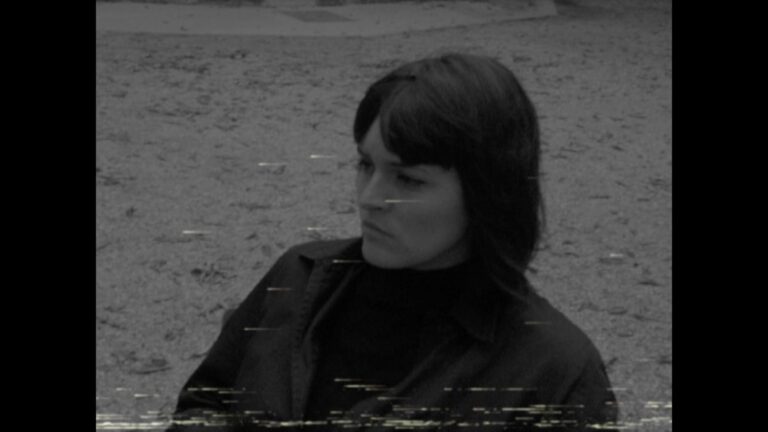
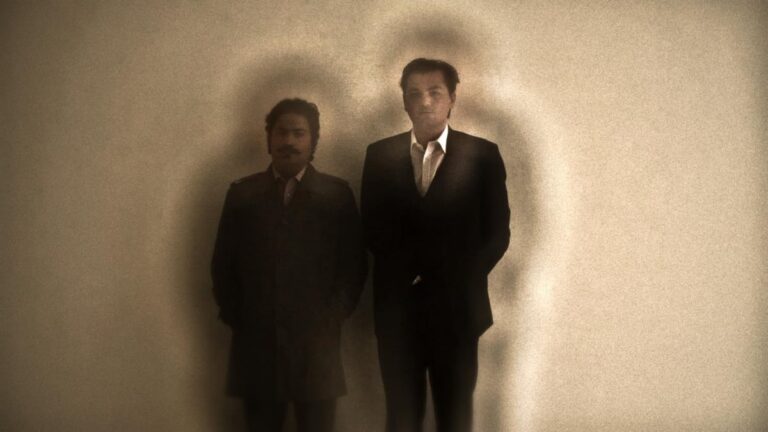
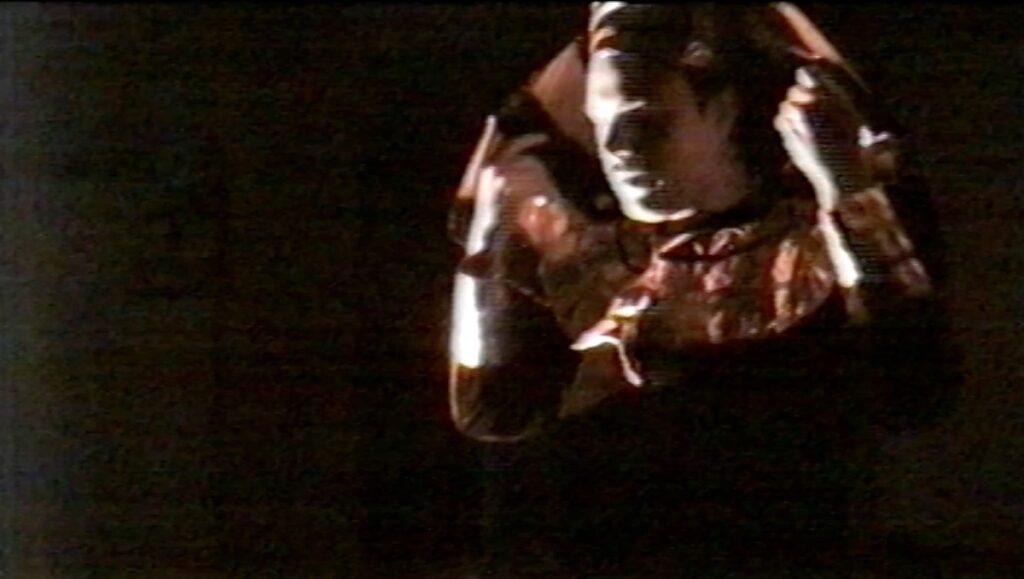
Shot on the obsolete VHS-C home video format, Merlin the Sorcerer features Núñez on his own in a series of what could be interpreted as obscure transformative rituals (also a feature of Marrón de Momia). These are intercut with degraded footage from an old sword-and-sorcery movie and what might be found home video footage of nature or material shot especially for Merlin. These sections have a visionary quality, as if invoked through the strange ritualistic performance sections that intersperse them. The film culminates in a long, intense take of Merlin strumming an instrument and singing in an impenetrably mumbled and accented version of English, while a video tape of landscape plays superimposed on top of him. His ‘magic’ is video; it is the other realm he can bring forth and the visionary matter he can manipulate. Its technology is as personal and in tune with him as the instrument he plays, as the swaying of his body. His appropriation of cinema, through video, is much like his use of English lyrics: something other and distant to him that is personalised through being rendered incomprehensible and thus reemerges with the haunting force of an emotionally eloquent private language.
For more information on Jorge Núñez, visit jorgenunezdelavisitacion.com. To purchase a copy of Merlin the Sorcerer, visit videosensations.storenvy.com.
About the author: Maximilian Le Cain is a filmmaker and film critic living in Cork City, Ireland. maximilianlecain.com
Originally published by EFS Publications, 2016. Restored and republished as a web article in 2026; the source document is preserved in the EFS archive.